
Pricing built for a behaviour intelligence platform, not a point tool.
Insight AI is priced around workspace tier, seat count, and usage expansion so teams can start with one workflow and scale into prediction, simulation, and governed automation.
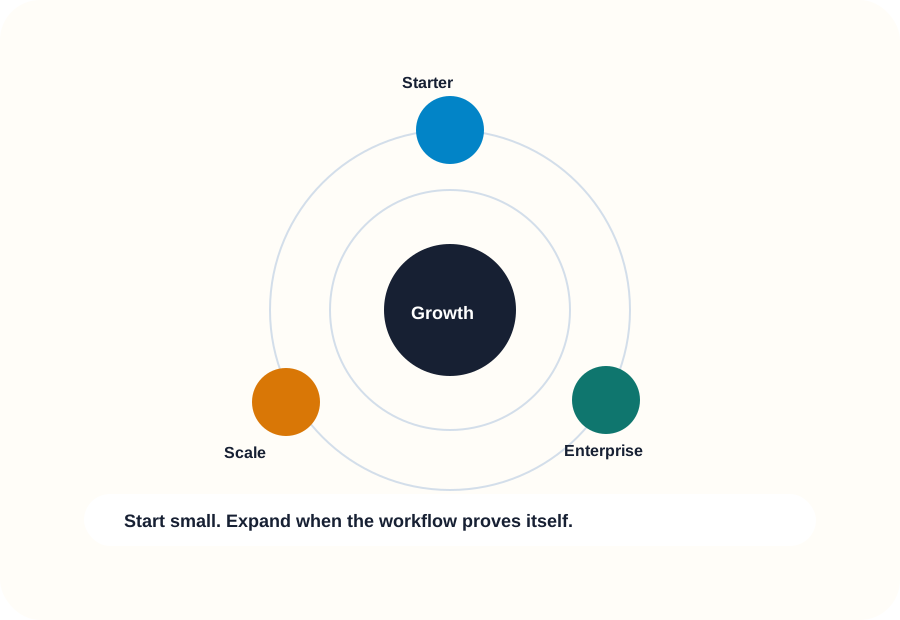
The commercial model matches how the platform expands.
The base plan creates habit. Higher tiers unlock prediction, simulation, and agent control instead of flattening all of that value into one cheap bundle.
Workspace tier
A fixed monthly fee determines which module groups are unlocked across Explorer, Growth, Pro, and Enterprise.
Seat count
Each plan includes a base number of seats, with expansion available as more researchers, operators, or stakeholders join the workflow.
Agent runs and credits
Prediction runs, simulations, and workflow automation can scale with usage so enterprise teams pay for the depth they actually use.
Commercial framing
Insight AI is sold as an operating layer.
The platform covers 15 modules across research, prediction, simulation, governance, and reporting. That makes flat one-size pricing the wrong model. The right structure is base workspace access plus controlled expansion into higher-value modules and usage.
Explorer and Growth
Create adoption with core workflows, prediction, and integrations.
Pro
Monetize strategic planning, scenario work, and richer reporting.
Enterprise
Price governance, agent control, security, and workflow automation at the right level.
Add-ons
Capture expansion through seats, studies, connectors, and AI run volume.
Four tiers built around what teams actually unlock.
Explorer gets teams started. Growth adds prediction. Pro adds simulation. Enterprise adds the agent operating layer and governed rollout.
Explorer
Contact sales
2 seats included
Founders, early D2C teams, and startups validating core workflows.
Growth
Contact sales
5 seats included
Product, growth, VC, and agency teams that need recurring research loops.
Pro
Contact sales
10 seats included
Strategy and brand teams using Insight AI across multiple high-value decisions.
Enterprise
Contact sales
Unlimited seats
Large organizations embedding governance, automation, and broader operating controls.
A fast view of what changes as teams scale.
The main step-ups are prediction, simulation, integrations, reporting depth, and governed automation.
Add-ons and usage
Expansion revenue sits on top of the plan.
Add-ons are available when teams need more usage, more connectors, more seats, or a more customized operating setup.
Extra AI agent runs
per 100 runs
Extra research studies
10-study pack
Additional data connectors
per connector per month
Extra seats
per seat per month
Human validation bridge
per study
Custom population build
one-time
White-label workspace
per month
Additional language pack
per month
Simulation scenarios pack
per pack
Executive Copilot
per unit
Questions buyers ask before rollout.
These are the common commercial questions around pricing, expansion, and enterprise deployment.
What changes between Explorer, Growth, Pro, and Enterprise?
Explorer covers the core workflow. Growth unlocks prediction and integrations. Pro adds simulation and strategy modules. Enterprise adds the agent operating layer, governance, and deeper security support.
How is pricing structured?
Pricing follows three levers: workspace tier, included seat count, and usage-based expansion for agent runs or add-ons when teams need more capacity.
Can teams start small and expand later?
Yes. Most teams begin with one workflow and then expand into more modules, connectors, and seats once the workflow proves itself internally.
Do you support enterprise buying requirements?
Yes. Enterprise plans can include procurement support, security review help, governance configuration, deployment scoping, and custom rollout planning.